
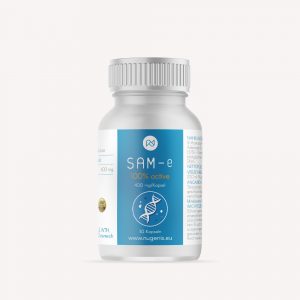
SAM-e, Amazon & Silent Deception: Why Consumer Fraud Goes Unpunished
In spring 2024, the U.S. supplement manufacturer NOW Foods released an independent lab analysis of ten SAM-e products sold on Amazon. The results sent shockwaves through the industry: Eight out of ten products contained significantly less active ingredient than stated on their labels—one of them had almost no detectable SAM-e at all.
But instead of sparking public outcry or legal action, the response was surprisingly muted. Why is that? And what does it reveal about the state of consumer protection in the global supplement market?
What Is SAM-e—and Why Does Quality Matter?
SAM-e (S-Adenosylmethionine) is a biologically active compound involved in methylation, neurotransmitter production, liver detoxification, and cellular regeneration. As a supplement, it’s often used for depression, joint health, and liver conditions. These are sensitive areas—users often turn to SAM-e with high hopes and health-related urgency.
NOW Foods Exposes a Structural Problem
NOW Foods used independent labs to test the products. The findings were troubling:
- One product contained just 4% of the stated SAM-e content.
- Several products fell short by more than 50%.
- Only two products matched their label claims—one of them was from NOW Foods itself.
This isn’t just about a few bad actors. It points to a serious lack of oversight across the industry.
Why Isn’t This Fraud Punishable?
1. Supplements Are Loosely Regulated
In both the U.S. and Europe, SAM-e is classified as a dietary supplement, not a drug. That means:
- No mandatory pre-approval for effectiveness or safety.
- No systematic quality control by regulatory agencies.
- Manufacturers are only accountable for formal labeling—not actual potency or efficacy.
2. Online Retailers Complicate Accountability
Many underdosed products were sold by third-party sellers on Amazon, often based overseas. These sellers frequently change names and business locations, making legal follow-up nearly impossible.
3. The Burden of Proof Falls on Consumers
Even if a product is essentially ineffective, the burden is on the consumer to prove:
- The product caused harm.
- The manufacturer acted knowingly and intentionally.
In practice, this standard is nearly impossible to meet.
Accountability Without Enforcement: A Systemic Dilemma
This case highlights a troubling reality: Even in a high-tech market like supplements, regulatory blind spots persist. Companies can follow the law and still deceive customers—unless someone proves otherwise.
NOW Foods deserves credit for voluntary transparency. But should policing the industry really be left to competitors? What’s needed are independent, institutional testing bodies with legal authority.
What Consumers Should Know
- Brand reputation matters: Reputable brands like NOW Foods routinely conduct internal and third-party testing.
- Look for transparency: Ask for test results, certificates of analysis, and clear sourcing information.
- Amazon ratings aren’t enough: High reviews often reflect customer satisfaction—not verified ingredient quality.
- Track your results: If a supplement seems ineffective, it may be underdosed—not your body’s fault.
Final Thoughts
The SAM-e case isn’t an isolated incident—it’s a symptom of a system that outsources responsibility. Consumers relying on supplements for mental and physical health deserve better.
A transparent, well-regulated, and ethically grounded supplement industry isn’t a luxury—it’s a necessity. Especially when health, hope, and trust are on the line.
Yours,
Eduard Rappold – NUGENIS
Note: This information is provided for educational purposes and does not substitute for professional medical advice. Always consult with healthcare providers for personalized guidance on health-related matters.
Copyright © Eduard Rappold 2025
nugenis.eu/shop/
Eduard Rappold

Eduard Rappold ist Autor, Unternehmer und als Arzt wissenschaftlicher Vermittler im Bereich Epigenetik und Präventionsmedizin. Im Zentrum seiner Arbeit steht die Frage, wie Umwelt, Verhalten und biografische Erfahrungen die Regulation unserer Gene beeinflussen – und welche Konsequenzen sich daraus für Gesundheit, Alterungsprozesse und chronische Erkrankungen ergeben. Sein Ansatz verbindet: aktuelle Erkenntnisse der Epigenetik neurobiologische Stressforschung mitochondriale und metabolische Regulation präventive und lebensstilbasierte Medizin Als Betreiber der Plattform epigenetik.at macht er komplexe wissenschaftliche Zusammenhänge für ein breites Publikum zugänglich. Dabei liegt der Fokus auf einer klaren, verständlichen Darstellung ohne Vereinfachung der Inhalte. Ein besonderer Schwerpunkt seiner Arbeit ist die Rolle von chronischem Stress als zentralem biologischen Faktor für Dysregulation, beschleunigtes Altern und Krankheitsentstehung. Eduard Rappold ist zudem Co-Autor einer wissenschaftlichen Studie zur Rolle von Antioxidantien und genetischen Faktoren bei neurodegenerativen Erkrankungen, insbesondere Alzheimer.