
Oxidative Stress and Alzheimer’s: New Insights into Genetic Factors and Antioxidant Defense
# Cellular protection against oxidative Stress and Alzheimer’s
In a recent study I co-authored (https://alz-journals.onlinelibrary.wiley.com/doi/10.1002/alz.70117), we gained new insights into how genetically driven changes in antioxidant defense pathways contribute to Alzheimer’s disease (AD). Our research focused on key enzymes such as **superoxide dismutase 1 (SOD1)** and **glutathione S-transferase omega 1 (GSTO1)** — both essential for cellular protection against oxidative stress.
## Genetics Meets Biochemistry: SNP rs4925 in GSTO1
Using genomic analysis, we identified a specific single nucleotide polymorphism (*SNP rs4925*) in the *GSTO1* gene that is associated with elevated GSTO1 levels in platelet samples. This genetic variant may reflect a compensatory response to increased oxidative stress — a known hallmark of AD pathology.
## SOD1 and CCS: Early Biomarkers in Disease Progression
In addition to elevated GSTO1, we observed increased levels of **SOD1**, an enzyme that converts superoxide radicals into hydrogen peroxide. Interestingly, **copper chaperone for SOD1 (CCS)** — which is critical for SOD1 activation — was already reduced in individuals with **mild cognitive impairment (MCI)**, suggesting dysregulated enzyme activity even at early disease stages.
## GPX1 and Glutathione: A System in Disbalance
We also found that **glutathione peroxidase 1 (GPX1)**, an enzyme that works in tandem with SOD1, was significantly decreased in both frontal lobe brain tissue and platelets in AD patients. These findings highlight an imbalance in the **glutathione system**, one of the body’s most important defenses against oxidative damage.
## SAM-e: A Promising Therapeutic Target
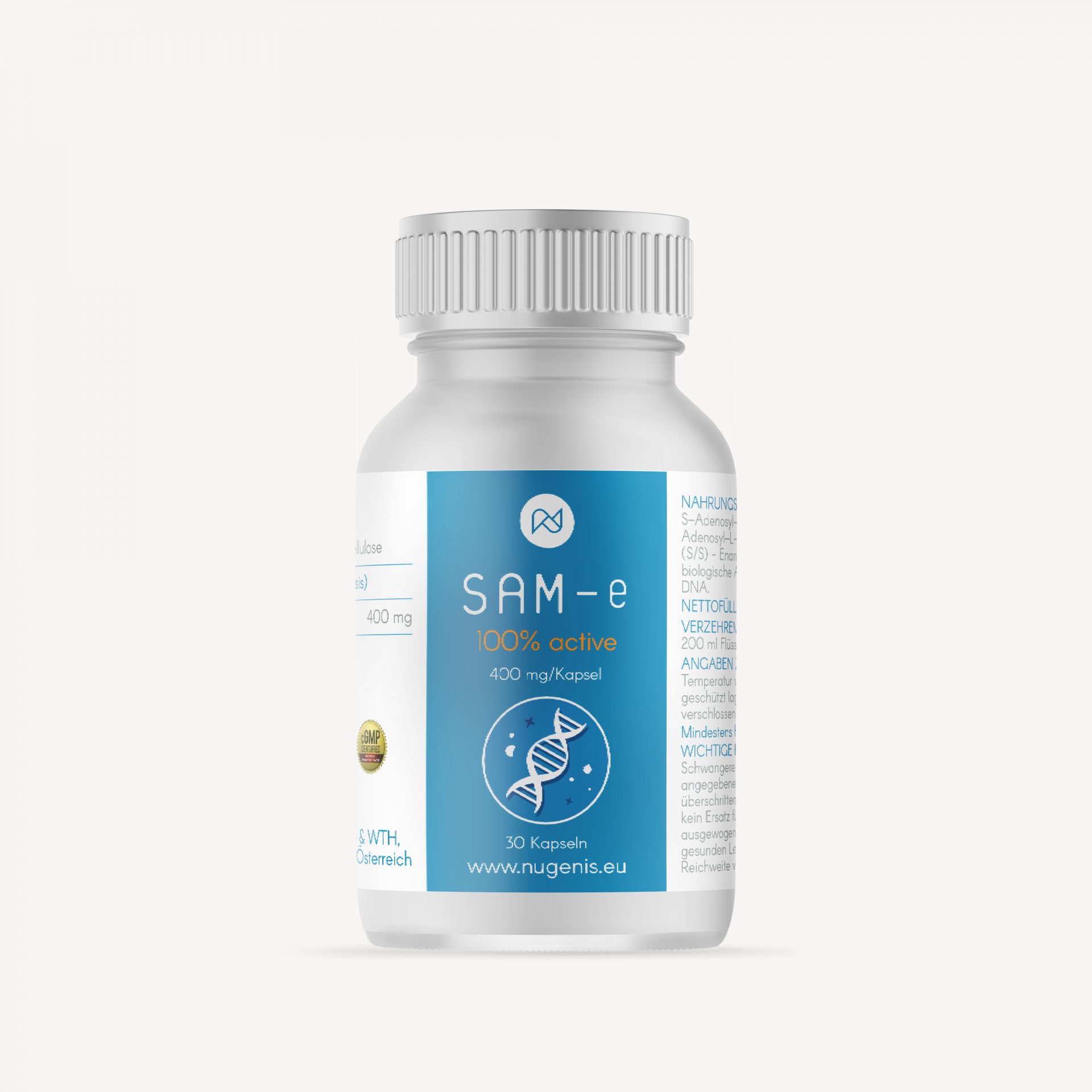
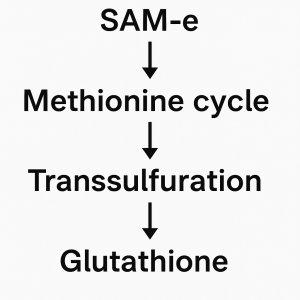
One potential therapeutic approach involves targeting the **methionine cycle**, particularly through supplementation with **S-adenosylmethionine (SAM-e)**. SAM-e is not only a universal methyl donor for epigenetic regulation but also a key precursor in the **transsulfuration pathway**, which leads to **glutathione synthesis**. Enhancing this metabolic route may help boost antioxidant capacity and offer neuroprotective effects.
## Conclusion
Our findings underscore the importance of genetic variants in regulating oxidative stress in Alzheimer’s and open the door to more personalized therapeutic strategies. Early changes in **SOD1** and **CCS** levels — detectable even in **MCI** — highlight the potential of these proteins as biomarkers and therapeutic targets. Supporting the glutathione system via **SAM-e** could represent a viable strategy to counteract oxidative damage in early neurodegeneration.
Yours,
Eduard Rappold
Note: This information is provided for educational purposes and does not substitute for professional medical advice. Always consult with healthcare providers for personalized guidance on health-related matters.
Copyright © Eduard Rappold 2025
nugenis.eu/shop/
Eduard Rappold

Eduard Rappold ist Autor, Unternehmer und als Arzt wissenschaftlicher Vermittler im Bereich Epigenetik und Präventionsmedizin. Im Zentrum seiner Arbeit steht die Frage, wie Umwelt, Verhalten und biografische Erfahrungen die Regulation unserer Gene beeinflussen – und welche Konsequenzen sich daraus für Gesundheit, Alterungsprozesse und chronische Erkrankungen ergeben. Sein Ansatz verbindet: aktuelle Erkenntnisse der Epigenetik neurobiologische Stressforschung mitochondriale und metabolische Regulation präventive und lebensstilbasierte Medizin Als Betreiber der Plattform epigenetik.at macht er komplexe wissenschaftliche Zusammenhänge für ein breites Publikum zugänglich. Dabei liegt der Fokus auf einer klaren, verständlichen Darstellung ohne Vereinfachung der Inhalte. Ein besonderer Schwerpunkt seiner Arbeit ist die Rolle von chronischem Stress als zentralem biologischen Faktor für Dysregulation, beschleunigtes Altern und Krankheitsentstehung. Eduard Rappold ist zudem Co-Autor einer wissenschaftlichen Studie zur Rolle von Antioxidantien und genetischen Faktoren bei neurodegenerativen Erkrankungen, insbesondere Alzheimer.