

The Three Enemies of Life — Self, Community, and Environment: Restoring Resonance in a Fractured World
Introduction: The Fractured Symphony of Life
Health is the art of coherence — the ongoing dialogue between Ich-Welt, Wir-Welt, and Umwelt.
When one of these dimensions falls out of tune, the others soon follow.
The collapse of individual resilience mirrors the erosion of social trust and the degradation of the biosphere.
In molecular terms, it is one process: the loss of rhythmic balance in the network of life.
The three enemies of life — self-conflict, social dissonance, and ecological chaos — are not independent.
They are the same melody played in different octaves: psychological, social, planetary.
- The Self: Molecular Disintegration through Inner Conflict
When inner dialogue becomes self-attack, stress hormones replace serenity.
Cortisol, MAO-B, and oxidative radicals act as chemical agents of alienation.
The epigenome, once fluid and adaptive, hardens into a defensive script.
Genes of trust and creativity fall silent; those of vigilance and inflammation awaken.
The individual begins to age inwardly, losing the capacity to regenerate — not because of years, but because of unrelieved strain.
This is the Ich-Welt in decay: an interior exile that manifests as cellular noise.
- The Community: The Collapse of Resonance
No cell, no organism, no society can live without rhythm.
When trust breaks down, when cooperation gives way to competition,
the Wir-Welt dissolves into biochemical stress.
Inflammation becomes the biological grammar of isolation.
Populations under chronic social threat — inequality, insecurity, aggression — show measurable patterns of genetic dysregulation.
The same cytokines that mediate inflammation also sculpt emotion.
The result: epidemics of burnout, depression, and autoimmune disorders —
the immunology of loneliness.
- The Environment: The Echo of a Sick World
The biosphere is our outer metabolism.
When it suffocates, so do we.
Pollution, chemical overload, and circadian disruption are not abstract phenomena — they are molecular intrusions into our cells.
Heavy metals disturb methylation; plastics imitate hormones; noise extinguishes silence.
The human organism is losing its ecological mirror,
and with it the feedback that once sustained biological meaning.
The Umwelt no longer sings; it hums with entropy.
- The Common Pathway: Oxidative and Epigenetic Entropy
Across all three domains, one mechanism unites the fall: oxidative imbalance.
ROS, cortisol, MAO, and nitrosative stress form the shared alphabet of decay.
They erode DNA integrity, silence repair genes, and accelerate the biological clock.
Epigenetically, these stressors imprint a message of fragmentation:
the genome forgets its harmony and begins to read itself incoherently.
In that moment, disease becomes not an invasion but a miscommunication —
the loss of language between systems.
- The Principle of Resonance
Against entropy stands resonance — the capacity of life to self-tune across scales.
A heart in coherence with breath, a mind in dialogue with empathy,
a society in rhythm with nature — these are not poetic images but physiological realities.
Resonance restores parasympathetic tone, synchronizes oscillations, and stabilizes methylation rhythms.
It is the music of repair, audible in every heartbeat, measurable in every chromatin mark.
Where resonance thrives, aging slows; inflammation resolves; mitochondria flourish.
In short: Resonance is the antidote to entropy.
- Toward Reintegration
Healing begins not with control but with reconnection.
To heal the self without healing community is futile;
to heal community without healing nature is hypocrisy.
Epigenetic renewal requires a triadic practice:
- Inner coherence through mindfulness, creativity, and sleep.
- Social resonance through trust, dialogue, and compassion.
- Ecological restoration through simplicity, rhythm, and reverence.
Together they form a new paradigm — one in which biology, ethics, and culture merge into a single living system.
Closing Reflection: The Grammar of Life
Life writes in a language of balance:
Self is the pronoun, Community the syntax, Environment the context.
When any element is lost, the grammar collapses into noise.
But when we remember this grammar — through care, attention, and love —
the genome begins to read again the oldest story of all:
that everything is connected,
and connection itself is the deepest form of healing.
Eduard Rappold
Note: This information is provided for educational purposes only and does not replace professional medical advice. Always consult qualified healthcare professionals for medical concerns.
Copyright © Eduard Rappold 2025
http://nugenis.eu/shop
NUGENIS specializes in epigenetically active nutritional supplements.
Eduard Rappold
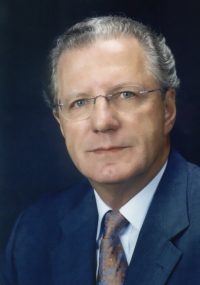
Eduard Rappold ist Autor, Unternehmer und als Arzt wissenschaftlicher Vermittler im Bereich Epigenetik und Präventionsmedizin. Im Zentrum seiner Arbeit steht die Frage, wie Umwelt, Verhalten und biografische Erfahrungen die Regulation unserer Gene beeinflussen – und welche Konsequenzen sich daraus für Gesundheit, Alterungsprozesse und chronische Erkrankungen ergeben. Sein Ansatz verbindet: aktuelle Erkenntnisse der Epigenetik neurobiologische Stressforschung mitochondriale und metabolische Regulation präventive und lebensstilbasierte Medizin Als Betreiber der Plattform epigenetik.at macht er komplexe wissenschaftliche Zusammenhänge für ein breites Publikum zugänglich. Dabei liegt der Fokus auf einer klaren, verständlichen Darstellung ohne Vereinfachung der Inhalte. Ein besonderer Schwerpunkt seiner Arbeit ist die Rolle von chronischem Stress als zentralem biologischen Faktor für Dysregulation, beschleunigtes Altern und Krankheitsentstehung. Eduard Rappold ist zudem Co-Autor einer wissenschaftlichen Studie zur Rolle von Antioxidantien und genetischen Faktoren bei neurodegenerativen Erkrankungen, insbesondere Alzheimer.