
Centella asiatica – A Natural Telomerase Activator for Cellular Longevity
Centella asiatica is being investigated as a natural telomerase activator that may support telomere stability and cellular longevity.
http://epigenetik.at/telomerase-activator-centella-asiatica
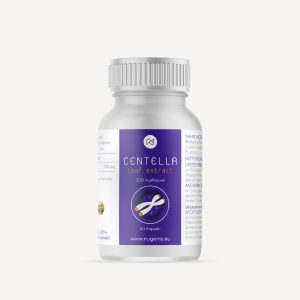
Centella Leaf Extract – 300 mg
60 vegan capsules
Titanium dioxide free
Centella asiatica, also known as Gotu Kola, is one of the most extensively studied medicinal plants in traditional Asian medicine.
In Ayurvedic medicine, Centella asiatica has been used for more than 2,000 years as a Medhya Rasayana—a class of herbal preparations traditionally used to enhance:
-
memory
-
cognitive function
-
neural regeneration
Modern biomedical research has confirmed many of these traditional uses. More than 120 bioactive compounds have been identified in the plant, including:
-
triterpenoids
-
polyphenols
-
flavonoids
-
essential oils
The most important bioactive constituents include:
-
Asiaticoside
-
Madecassoside
-
Asiatic acid
-
Madecassic acid
These compounds exhibit a wide range of pharmacological effects relevant to aging and chronic disease.
Telomeres – Key Regulators of Cellular Aging
Telomeres are protective DNA sequences located at the ends of chromosomes.
They stabilize chromosomal structure and prevent chromosomes from being recognized as damaged DNA.
Each time a cell divides, telomeres gradually shorten.
When telomeres become critically short, this can lead to:
-
cellular senescence
-
reduced regenerative capacity
-
chromosomal instability
-
programmed cell death
For this reason, telomere length is widely considered a biomarker of biological aging.
Telomeres are also particularly sensitive to oxidative stress, making them indicators of accumulated cellular and mitochondrial damage.
A large study of 3,700 twins aged 70–82 years demonstrated that individuals with shorter telomeres were more likely to show declines in several health parameters, including:
-
lung function
-
memory performance
-
walking speed
Telomerase – The Enzyme that Maintains Telomeres
The enzyme telomerase plays a crucial role in maintaining telomere length.
Telomerase can extend telomeres and partially counteract their progressive shortening.
This enzyme was discovered in 1984 in the ciliated protozoan Tetrahymena by molecular biologists:
-
Elizabeth Blackburn
-
Carol Greider
Their discovery revolutionized the understanding of cellular aging and earned them the 2009 Nobel Prize in Physiology or Medicine.
Today, telomerase activity is a major focus in research on:
-
aging biology
-
regenerative medicine
-
longevity science
Centella asiatica as a Natural Telomerase Activator
Experimental studies have identified certain plant extracts capable of stimulating telomerase activity.
In one study investigating potential telomerase activators, Centella asiatica leaf extract demonstrated a remarkable increase in telomerase activity.
At a concentration of 0.02 µg/ml, Centella extract produced an 8.8-fold increase in telomerase activity compared with untreated cells.
This effect was significantly stronger than that observed with other botanical compounds tested in the study.
These findings suggest that Centella asiatica may represent a promising natural compound for research in healthy aging and cellular longevity.
(Tsoukalas et al., Molecular Medicine Reports, 2019)
Telomeres and Brain Structure
Telomere biology may also influence brain structure and cognitive function.
A study published in JAMA Network Open (2019) found that short-term changes in leukocyte telomere length were associated with measurable changes in cortical thickness in the brain.
The most notable changes occurred in the precuneus, a region involved in:
-
self-awareness
-
autobiographical memory
-
spatial orientation
Longer telomeres were associated with increased cortical thickness, while telomere shortening corresponded to cortical thinning.
These results suggest that biological aging processes may be more dynamic and reversible than previously assumed.
Neuroprotective Effects of Centella asiatica
Centella asiatica has demonstrated significant neuroprotective properties in experimental studies.
These include:
-
protection against beta-amyloid toxicity
-
enhanced mitochondrial activity
-
improved antioxidant status
-
increased synaptogenesis and dendritic branching
These neuroprotective effects are largely attributed to the plant’s triterpenoid compounds, particularly asiaticoside and madecassoside.
Importantly, these compounds have been shown to cross the blood–brain barrier, allowing them to exert direct effects within the central nervous system.
Additional Pharmacological Effects of Centella asiatica
Research has documented a wide range of potential biological activities associated with Centella asiatica.
Neuroprotection
-
promotion of neuronal growth
-
enhancement of memory and learning
-
protection against neurodegenerative processes
Cardiovascular support
-
protection against myocardial ischemia
-
improved vascular function
-
reduction of inflammatory signaling pathways
Skin regeneration and wound healing
-
stimulation of collagen synthesis (20–35%)
-
acceleration of wound healing
-
improved tissue regeneration
Metabolic regulation
-
improved glucose uptake
-
reduction of oxidative stress
-
protection against diabetic complications
Why Centella Leaf Extract?
The biologically active compounds of Centella asiatica are primarily concentrated in the leaves of the plant.
High-quality extracts therefore focus on Centella leaf extract standardized for triterpenoid content.
The World Health Organization recommends that Centella herbal preparations contain at least 2% triterpenoid glycosides, including:
-
asiaticoside
-
madecassoside
These compounds are collectively known as centelloids and are considered responsible for many of the plant’s therapeutic properties.
Safety and Tolerability
Centella asiatica has been widely studied for safety.
The Botanical Safety Handbook classifies the plant as a Class 1 herb, indicating that it is generally regarded as safe when used appropriately.
Clinical studies report that side effects are rare and occur with a frequency similar to placebo.
Centella asiatica in Modern Preventive Medicine
Centella asiatica combines several biological effects that are relevant to healthy aging and preventive medicine:
-
support of telomere maintenance
-
reduction of oxidative stress
-
protection of mitochondrial function
-
promotion of neuronal plasticity
-
stimulation of tissue regeneration
These properties have made Centella asiatica an increasingly important subject of research in the field of longevity science and preventive health.
Product Information
Ingredients (per capsule)
Centella asiatica leaf extract – 300 mg
60 vegan capsules
Titanium dioxide free
Scientific Disclaimer
The information provided on this page is intended for educational purposes only and does not replace professional medical advice. Always consult qualified healthcare professionals for individual health concerns.
Copyright © Eduard Rappold 2026
http://nugenis.eu/shop
NUGENIS specializes in epigenetically active nutritional supplements


Eduard Rappold

Dr. Eduard Rappold, MSc ist ein erfahrener Forscher und Arzt, der sich seit Jahrzehnten für geriatrische PatientInnen einsetzt. In seinem Bemühen für Alzheimer-Erkrankte eine immer bessere Versorgung zu ermöglichen, wurde er 2003 mit dem Gesundheitspreis der Stadt Wien für das Ernährungszustandsmonitoring von Alzheimer-Kranken ausgezeichnet. Im Zuge seines Masterstudiums der Geriatrie hat er seine Entwicklung des Epigenetic Brain Protector wissenschaftlich fundiert und empirisch überprüft. Im September 2015 gründete er NUGENIS, ein Unternehmen, mit dem er Wissenschaft und Anwendung zusammenbringen möchte. Damit können Menschen unmittelbar von den Ergebnissen der Angewandten Epigenetik für ihre Gesundheit profitieren. Mit dem Epigenetic Brain Protector hat Dr. Eduard Rappold, MSc bereits für internationales Aufsehen gesorgt – auf der international wichtigsten Innovationsmesse, der iENA, wurde er 2015 mit einer Goldmedaille für hervorragende Leistungen zum Schutz vor Neurodegeneration ausgezeichnet. Auf den Webseiten nugenis.eu, epigenetik.at, spermidine-soyup.com und facebook.com/nugenis können Themen zur Epigenetik und Aktuelles nachgelesen werden.